
Introduction Human Aminopeptidase N (APN), also known as CD13, is a membrane-bound enzyme that plays a critical role in various physiological and pathological processes, including peptide digestion, antigen processing, and cellular signaling. It is involved in several diseases, such as cancer, inflammation, and viral infections. Measuring the levels of APN in biological samples can provide valuable insights into disease states, making the Human Aminopeptidase N ELISA kit a vital tool in clinical and research settings.

Key Features of the Human Aminopeptidase N ELISA Kit
- High Sensitivity and Specificity: The ELISA kit is designed to accurately quantify APN levels in human serum, plasma, and other biological samples. It uses highly specific antibodies that ensure the detection of APN without cross-reactivity, which is critical for reliable diagnostics. For more on antibody specificity, refer to NCBI.
- Quantitative Measurement: The kit provides a quantitative analysis of APN concentration, making it suitable for clinical diagnostics and research applications. Researchers can utilize this data to study disease progression, treatment response, and more. For guidelines on quantitative assays, visit PubMed.
- User-Friendly Protocol: The kit is straightforward to use, with a step-by-step protocol that includes sample preparation, reagent addition, incubation, washing, and measurement. This makes it accessible to laboratories of all sizes. For more information, see resources from the American Society for Clinical Pathology (ASCP).
Applications of the APN ELISA Kit
- Cancer Research: APN is known to be overexpressed in various cancers, including lung, liver, and pancreatic cancers. By measuring APN levels, researchers can study tumor growth, angiogenesis, and metastasis. The National Cancer Institute (NCI) provides comprehensive information on cancer biomarkers.
- Infectious Disease Studies: APN acts as a receptor for several coronaviruses, including the virus that causes Middle East Respiratory Syndrome (MERS). Monitoring APN levels can help in understanding viral entry mechanisms and disease progression. For detailed insights into infectious disease research, visit the Centers for Disease Control and Prevention (CDC).
- Inflammatory Disorders: APN is involved in the regulation of inflammatory responses. Elevated APN levels have been associated with inflammatory conditions such as rheumatoid arthritis. Using the ELISA kit, researchers can monitor changes in APN levels, aiding in the understanding of inflammatory pathways. Refer to the World Health Organization (WHO) for further details on inflammation research.
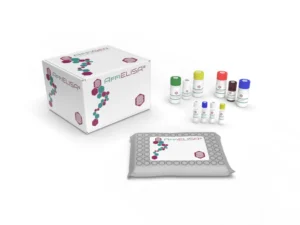
How the ELISA Works The Human Aminopeptidase N ELISA kit operates on the sandwich ELISA principle:
- Coating: The wells of the ELISA plate are coated with capture antibodies specific to APN.
- Sample Addition: Biological samples are added to the wells, where APN binds to the capture antibodies.
- Detection: A second antibody, conjugated to an enzyme (e.g., HRP), binds to APN, forming a “sandwich” complex.
- Signal Development: A substrate is added, and the enzyme converts it into a detectable signal, typically a color change that can be measured with a spectrophotometer. Learn more about the sandwich ELISA method at the Food and Drug Administration (FDA).
Advantages of Using the Human APN ELISA Kit
- Non-Invasive Sampling: The ELISA kit allows for the measurement of APN levels using non-invasive biological samples like serum and plasma, reducing patient discomfort. The National Institutes of Health (NIH) provides guidelines on non-invasive diagnostic tests.
- High Throughput: The kit can process multiple samples simultaneously, making it ideal for high-throughput studies. This is particularly useful in research settings where large sample sizes are necessary.
- Reproducibility and Reliability: The standardized nature of the ELISA ensures that results are consistent and reproducible across different batches, which is critical for longitudinal studies and clinical diagnostics. For more on reproducibility in diagnostics, refer to the Clinical and Laboratory Standards Institute (CLSI).
Usage Guidelines
- Sample Preparation: Collect and prepare samples following the provided protocol. Ensure samples are free from particulates and hemolysis, as these can affect assay accuracy. Guidelines on sample handling can be accessed at CDC.
- Reagent Preparation: Prepare reagents as instructed. Bring all components to room temperature before use to ensure optimal performance.
- Incubation and Washing: Follow the exact times and temperatures for incubation steps. Proper washing is crucial to remove unbound materials and reduce background noise.
- Measurement: Use a microplate reader to measure the absorbance, and calculate the concentration of APN based on the standard curve. More information on ELISA equipment can be found at the FDA.
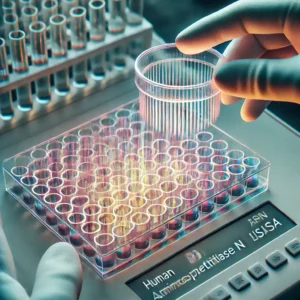
Safety and Storage
- Store the kit and reagents at recommended temperatures (usually 2-8°C) to maintain their integrity.
- Handle all biological samples as potentially infectious, following safety guidelines from OSHA.
- Properly dispose of all waste materials, including used plates and reagents, in accordance with local and federal regulations.
Conclusion The Human Aminopeptidase N ELISA kit is a robust and reliable tool for detecting and quantifying APN levels in biological samples. Its applications in cancer, infectious diseases, and inflammatory disorders make it indispensable for both research and clinical diagnostics. Laboratories can depend on its high sensitivity, reproducibility, and ease of use to obtain accurate and meaningful data. For further details, consult authoritative sources like the NIH, CDC, and FDA.
Further Reading